Your Google Ads account should help you answer a business question: are you paying to reach people your firm can help, and what happens after they contact you? Juris Digital manages Google Search campaigns around your practice areas, markets and intake outcomes, so the next budget decision has evidence behind it.
Google Search strategy, campaign management and measurement for law firms.
Start with the firm
Make the account serve the firm's priorities.
You may already have an account that generates calls but leaves you uncertain about case quality. You may be entering a new market, adding a practice area or taking over campaigns from another provider. Each starting point calls for a different plan.
We begin with the matters you accept, the locations you serve, your intake capacity and the economics of a retained client. Then we review the account and identify what needs attention first. This platform work fits within our broader law firm PPC partnership, with Google Search evaluated for the job it can do.
We review existing campaigns, conversion goals, search history, budgets and account access before recommending changes. A handover should preserve useful history and make responsibilities clear. You receive a prioritized plan connecting account issues to business consequences: unsuitable inquiries, duplicated reporting, missed demand or spend the firm cannot evaluate.
02
Organize the spend around the work you want.
Campaign structure should make your priorities visible. A family-law consultation and a commercial dispute may have different geography, intake requirements and value. We organize services and markets so their budgets and results can be assessed separately. Searches for your firm’s name are also evaluated separately from searches by people who have not chosen a lawyer.
03
Review the searches behind the clicks.
We choose keywords and matching settings, review the search terms Google makes available, and maintain exclusions for unsuitable demand. Exact match can include searches with the same meaning or intent; it does not remove the need for oversight. Search quality and intake feedback guide decisions about which opportunities to pursue, narrow or stop funding.
04
Connect the ad to a useful next step.
We write ads around the service, location and reasons a prospective client might choose your firm. The destination page needs to deliver on that message with clear information, credible attorneys and straightforward contact options. Our content and website teams can improve an existing page or build a campaign page where the task calls for one.
A strong click rate can coexist with fewer inquiries. We compare the share of people who click with the share who contact the firm, then investigate the search mix, page changes, mobile experience, contact forms and call routing. A drop after the click is a reason to inspect the full path before buying more traffic. We test the explanation before attributing a change to the page alone, so the account review and landing-page work inform one another.
05
Manage bidding with the right goals in place.
We review bidding, budget pacing, locations, schedules and available network settings alongside conversion quality. The goal being counted matters: teaching a campaign to find form submissions is different from giving it reliable information about suitable inquiries. We assess the available history and signal quality before expanding automation, and explain the reason for material changes.
06
Check the phone experience people actually get.
A number can look correct in the account while the live ad presents something different. We include the displayed number, local identity, routing, voicemail and office hours in call-path checks. Your staff should receive the call at the right destination and know how to handle it. When a forwarding number appears, we inspect the real experience and investigate mismatches.
Bring your goals, current campaigns, and questions. We’ll discuss where this channel fits.
Make the promise and next step easy to understand.
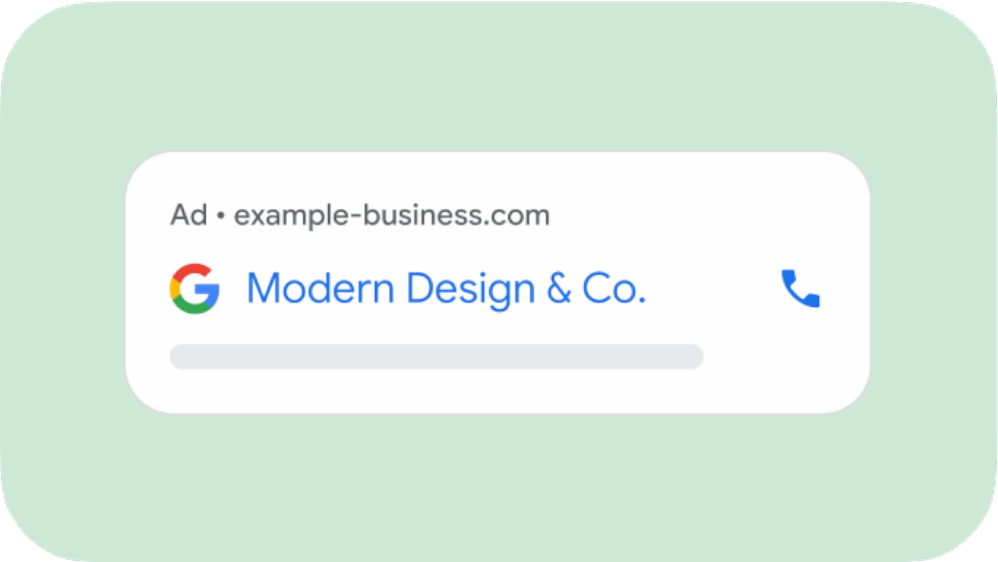
Google’s product illustration shows a search ad with a business identity, a service message, and a phone option. For a law firm, those elements should tell a prospective client which service is offered and how to request help.
This simplified official example is not a live legal search result or a Juris campaign. Actual formats and asset combinations vary.
Google’s published search-ad illustration. Platform illustration; not a Juris client campaign. Source checked September 11, 2026. Tap the image to open the full-size example. Example source ↗
From attention to an outcome
Give Google a more useful picture of success.
A dashboard can count calls while your attorneys see very little suitable work. We agree definitions with your team and connect the available campaign information to intake records. Google’s reporting and your firm’s records answer different questions; both belong in the review.
01
Record the inquiry and its available source.
Check calls, forms and their campaign identifiers. Test the contact paths people actually use and identify duplicate counting. Call tracking can help preserve source information when a prospect prefers to speak with someone.
02
Distinguish a suitable matter from a contact.
Your team records whether the inquiry fits the practice, jurisdiction and acceptance criteria. We separate qualification from whether a consultation was booked or attended. That distinction helps identify whether to change the advertising or address a break in follow-up.
03
Bring recorded outcomes into the review.
Where identifiers, consent and intake records support it, offline conversion reporting can connect an ad click to a later qualified inquiry or signed matter. A Google Click ID (GCLID) helps preserve that connection. A call export alone does not show that someone hired your firm. We define the outcome, test imports and check duplicates before using suitable signals for bidding. Your proposal identifies the integration work and reporting gaps.
Investment & fit
Set a budget you can evaluate.
We build the recommendation from your target matters, local demand, expected click costs and capacity to respond. A broad geographic plan with a small budget may produce too little evidence in any one market. Concentrating on a defined priority can make the first investment easier to judge.
The proposal separates media spend, management, setup and any landing-page or measurement work. We agree what the initial period should teach us and when to review it. Expanding spend should follow evidence about suitable inquiries and recorded cases, allowing for the time your clients take to retain the firm.
Your ad schedule is not your monthly spending limit.
For most Google Ads campaigns, the monthly spending limit is 30.4 times the average daily budget. Google now paces scheduled campaigns toward that amount even when they run on fewer days. A full-month campaign with an unchanged $100 daily budget can therefore have a $3,040 monthly limit despite a Monday–Friday schedule. Actual spend can be lower.
We set the budget and staffed hours separately, review pacing, and account for changes made during the month. Turning off weekends alone does not reduce that monthly limit. Google’s spending and scheduling guidance.
Paid media specialists working alongside the content, design, and marketing team. Your proposal defines the people and work involved in the engagement.
David Gutierrez
Senior Paid Media Manager
Shahla Cornelio
Senior Paid Media Specialist
Grace Paumar
PPC Specialist
“We felt valued and supported, rather than just another client.”
Attorney Kam MoeinzadehGeneral partnership review · not a result for this advertising platformClient review ↗
Before you commit
Practical questions. Clear answers.
The decisions that shape your scope, budget, and expectations.
Can you take over our existing Google Ads account?
Yes. The starting point is a review of access, billing, campaigns, conversion goals and available history. We identify what to preserve and which changes need priority. We also coordinate with your website and intake contacts so the handover covers the path beyond the ad.
Do Google Ads improve our organic rankings?
Buying Search ads does not buy organic rankings. Paid search and SEO can support the same business goals, but they work differently. We coordinate useful content and market priorities while reporting each channel’s role. Our SEO and PPC guide explains the investment decision.
Will you guarantee the top ad position?
No. Delivery depends on the auction, relevance, budget, approval and other conditions. Our work is to manage those inputs and evaluate the resulting inquiries. A prominent position is only useful when it reaches the right person at a cost the firm can justify.
Do we need a separate landing page?
It depends on the searcher’s task and the quality of the existing page. We assess message alignment, credibility, mobile usability and contact options. Sometimes a focused campaign page helps; sometimes improving the relevant service page is the better use of the firm’s resources.
Are Local Services Ads and Performance Max included?
They are separate campaign decisions. This service focuses on Google Search. Local Services Ads use a different lead-based model; Performance Max can reach multiple Google properties. Your proposal identifies the channels, work and measurement included.
What will you need from our firm?
We need clear acceptance criteria, someone who can approve the firm’s messaging, and consistent updates on inquiry outcomes. We handle campaign work and explain the choices. Your team’s feedback helps us understand which contacts became worthwhile matters and where follow-up needs attention.
What happens to our call-only ads in February 2027?
Google says existing call-only ads will stop receiving impressions in February 2027. Its replacement is responsive search ads with call assets. We review the affected ads, prepare the replacements, and check approval, phone numbers, schedules, website destinations and measurement before retiring the old format.
That gives your firm time to verify both the call and website paths before the deadline. This is a Search ad-format change, separate from Local Services Ads billing. Google’s transition instructions. Guidance checked September 11, 2026.
What should our firm do about the Local Services Ads migration?
Google is moving LSA accounts into specialized Performance Max campaigns with pay-per-lead goals. The rollout began with selected US home and storefront services in August 2026; remaining categories extend into 2027. Your account’s notice determines the timing.
Save campaign performance history before migration. Google says those reports will not transfer and recommends screenshots when records are needed immediately. Past customer lead history is treated separately and is due to transfer. After migration, the old dashboard redirects to Google Ads.
Tell us which matters you want and what your current campaigns leave unanswered. We will use that conversation to scope the account, landing-page and measurement work your firm needs.