If your firm needs more of the right matters, should you fund search engine optimization (SEO), pay-per-click (PPC) ads, or both? Start with the cases you can take, the time you can wait, and the person who will answer the next call. A search visit has little value if it is for the wrong jurisdiction, goes to a generic page, or reaches an intake team that cannot follow up.
A practical starting answer: Use paid search when you need to test demand or reach prospective clients soon and can fund a controlled test through enough inquiries to learn from it. Invest in SEO when the firm can sustain improvements to its website, local presence, and useful practice-area pages over time. Use both when the budget and intake team can support both, with each channel assigned a clear job. Neither channel guarantees a signed matter, and neither should be judged by clicks alone.
What is the difference between SEO and PPC?
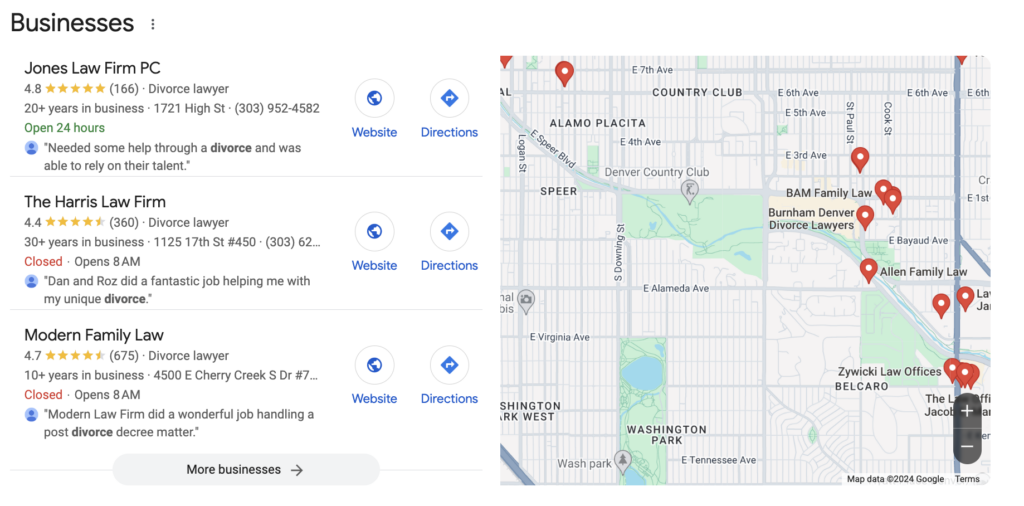

SEO is the work of making your firm’s pages and local presence useful, accessible, and relevant to people searching for legal help. It can improve visibility in unpaid search results and local results. You do not pay Google for an organic click, but you do pay for the people and work involved: research, writing, site improvements, local profile upkeep, and measurement. Organic placement is not purchased or guaranteed.
PPC usually means search ads that charge when someone clicks. In Google Ads, a firm can choose the searches, locations, ad copy, landing pages, and budget it wants to test. The actual cost per click and whether an ad appears depend on the auction, including bids, ad and landing-page quality, and the context of the search. A paid click is a visit, not an inquiry or a client. Google explains the ad auction.
Google Local Services Ads (LSAs) are another paid-search option. They generally charge for leads rather than clicks, subject to the program’s rules and category availability. Treat them as a separate line in your plan because their lead and billing measures differ from conventional PPC. Google explains Local Services Ads in the United States.
| Owner question | SEO | PPC search ads |
|---|---|---|
| What do we pay for? | The ongoing work and tools; no charge for an organic click. | Ad spend when a click is charged, plus any management, creative, and landing-page costs. |
| What can we change quickly? | The site and content, though search visibility may take time to respond and is outside the firm’s control. | Targeting, ads, landing pages, and budgets can be adjusted; ad delivery and results still vary. |
| What remains when spending stops? | Useful pages and site improvements remain, but visibility requires maintenance and can change. | Ads generally stop serving when the campaign or budget stops. The learning from the test can remain. |
| What can mislead us? | Rankings or traffic without suitable inquiries. | Clicks or reported conversions that are not qualified consultations or retained matters. |
Paid placement does not buy a better organic position. Google says ad payment has no impact on the organic results returned for a search. The two channels can share research and landing-page improvements, but paid clicks themselves are not an SEO ranking tactic. Google’s explanation of paid and organic results.
Choose around the matters your firm actually wants
Before selecting a channel, write down the practice areas and jurisdictions you can serve, the matters you want more of, and the ones you routinely decline. A personal injury firm may need to separate serious injury matters from low-fit calls. A divorce firm may want to distinguish an initial consultation from a retained matter. A business-law practice may need a narrower list of services and decision makers. These differences affect search terms, pages, ad targeting, and intake questions.
Then look at the current path from search to signed agreement. For each channel, keep these stages separate:
- Visit or ad click: Someone reaches your site or profile.
- Inquiry: Someone calls, messages, or submits a form.
- Qualified inquiry: The request fits your service, jurisdiction, and basic screening criteria.
- Consultation: A lawyer or intake professional speaks with the prospective client.
- Signed and opened matter: The firm accepts the matter and completes its own engagement process.
- Collected fee: Revenue actually received, which may arrive much later and may differ from the fee expected at signing.
If calls are missed or follow-up is slow, buying more traffic can make the reporting look better without adding cases. Fix that handoff before increasing a campaign. The same applies to SEO: a useful page needs a clear next step and an intake team prepared for the type of question it attracts.
When should a firm start with PPC?
PPC may be the better first test when your firm has a defined matter type, a serviceable market, an intake process ready now, and a budget it can afford to spend while learning. It can also help test whether a specific search and landing-page promise produces qualified conversations before the firm commits to building a larger content program.
Begin with a small, coherent set of searches tied to matters you want. Set geographic limits that match where you can act. Send visitors to a page that answers the question raised by the ad and explains the next step. Review the actual search terms, call and form quality, missed calls, consultation outcomes, and signed matters; do not optimize only for a platform’s conversion count. Google considers landing-page experience as part of its ad auction, so this work also matters to ad performance. How Google’s ad auction works.
Paid search is less suitable as an immediate answer if the firm cannot answer inquiries, cannot define what it will accept, or cannot tolerate the cost of a test that might produce no retained matters. Turning an ad on is quick; finding a profitable way to use it is not automatic.
If you want help structuring the test and its reporting, see law firm PPC management.
When should a firm put SEO first?
SEO deserves early investment when prospective clients need clear information to evaluate your firm, when your service and market are stable enough to build useful pages, and when the website has gaps that hurt both unpaid and paid visitors. Core work may include a technically accessible site, accurate practice and location information, helpful service pages, and a complete local profile where appropriate. Relevant mentions and links can also help people discover and evaluate the firm; see the law firm link building guide for that narrower topic.
An SEO plan should name the pages and searches it intends to serve, the content or technical problem each change solves, and how the firm will review qualified inquiries. There is no universal month in which SEO starts paying back. Competition, the current site, the scope of work, and search changes all affect timing. Ask anyone proposing SEO what results they expect, in what timeframe, and how they will measure success; business outcomes are not guaranteed. Google’s guidance on hiring an SEO.
If the firm has a sound website but limited monthly cash for media, SEO work may be a sensible first use of its budget. If the site cannot yet explain the matter or capture an inquiry, improving it is useful even when the firm ultimately plans to advertise. For help with that work, see law firm SEO services.
Check the economics before expanding either channel
Ask what the firm can spend to acquire an opened matter after allowing for all channel costs and the time until fees are collected. The simplest starting calculation is:
Acquisition cost per opened matter = campaign and management costs ÷ opened matters attributed to that campaign.
Compare that cost with a conservative estimate of collected fees minus the direct costs of serving the matter. Include the relevant time lag and cash-flow risk. For contingency matters, an expected fee at signing is especially different from a collected fee. For hourly or flat-fee matters, collections and direct work costs still matter. If attribution is uncertain, show a range rather than pretending to know which channel caused each matter.
Hypothetical example, not a Juris Digital or client result: A firm spends $4,000 on search ads and $1,000 on campaign management in a month. It records 100 ad clicks, 10 inquiries, 4 qualified inquiries, 2 consultations, and 1 opened matter. Total channel cost is $5,000, so the observed acquisition cost is $5,000 per opened matter. If that matter eventually yields $7,500 in collected fees after direct matter costs, the contribution above acquisition cost would be $2,500. If it yields less than $5,000, or if fees arrive much later than bills come due, the same campaign may be unacceptable. One matter is too small a sample to forecast future performance.
Run the same accounting for SEO, including content, site work, internal time, and vendor fees over a stated period. SEO traffic may serve several practice areas and older pages, so attribution can be less clean. The purpose is to make a defensible allocation decision, not to force a precise return-on-investment number from incomplete data.
Can SEO and PPC work together?
Yes, if each has a defined task. A paid campaign can test the language and questions that bring qualified inquiries. That evidence can inform a helpful service page, but a successful ad query does not guarantee an organic ranking. A strong SEO page can also become a useful ad landing page if it fits the ad and gives the visitor a clear next step. Shared pages, intake definitions, and reporting reduce confusion between channels.
Decide which channel owns each test. For example, use a paid campaign to learn whether a specific practice-area offer gets suitable consultations in a county while improving the permanent page that explains the service. Keep ad costs and organic work separate in the ledger, and watch for inquiries that contact the firm more than once. For implementation detail, read how law firm SEO and paid search work together.
A 30/60/90-day decision review
At the start: Record the current number of inquiries, qualified inquiries, consultations, opened matters, and collected fees by available source, with any tracking gaps. Define the matters and locations to target, a spending ceiling, and who owns intake follow-up. Do not fill missing numbers with zero.
Around day 30: Check that ads, pages, forms, calls, and tracking work. Review search-term and inquiry quality, missed contacts, and spending pace. For SEO, confirm that the agreed site and content work was actually completed and that key pages can be found and used. Avoid judging either channel on a single ranking or a handful of clicks.
Around day 60: Compare qualified inquiry and consultation rates by matter type and location. Correct mismatched ads or pages, intake bottlenecks, and pages that attract the wrong questions. Reallocate only when there is enough evidence to support the move; document what remains unknown.
Around day 90: Review opened matters, costs, and any collected fees available so far. Some matters will not yet have generated revenue. Decide whether to continue, narrow, expand, or pause each channel based on case fit, cash needs, and capacity. Keep the review going beyond 90 days where the sales or fee cycle is longer.
The choice is not a permanent vote for one channel. It is a decision about where the next dollar and the next hour of staff time can produce useful, measurable work for the firm. If you want to review that decision with Juris Digital, talk with our team about your firm’s search and intake plan.
Quote Form
Last updated: