SEO for personal injury lawyers should begin with the cases your firm wants to accept and the places it can actually serve. More search traffic is useful only if prospective clients can find the right page, reach your team, and receive a timely, accurate intake response.
This guide explains how to set those priorities, improve local and website visibility, and judge an SEO proposal against inquiries, signed agreements, and opened matters. If you are deciding whether to buy personal injury leads, that separate guide covers the buying decision; here we focus on building and evaluating your firm’s own search presence.
A useful starting point is a short brief from the firm owner and intake lead. It gives the SEO team a reason to prioritize a practice page, local profile, technical fix, or content project instead of chasing every high-volume phrase.
Which cases and markets should your SEO plan prioritize?
Write down the matters you want more of, the work you do not accept, the jurisdictions you can serve, and the offices with real staff or attorney coverage. Compare that brief with recent signed matters and declined inquiries. A car-accident page for a city you cannot serve, or a campaign that fills a full intake queue, is a poor first investment even if the query has volume.
- Case mix: Name the accident and injury matters your attorneys can evaluate, along with exclusions and referral paths.
- Market: Choose the locations tied to actual service, admission, offices, and intake coverage; do not create city pages solely to repeat a keyword.
- Capacity: State who answers calls and forms, who reviews uncertain matters, and how many additional consultations the team can handle.
- Outcome: Define the difference between an inquiry, a qualified opportunity, a signed agreement, and an opened matter before setting a target.
For the broader channel and positioning choices, see our personal injury marketing guide. The personal injury SEO service explains how we help firms turn a brief into an implementation plan.
What Is SEO for Personal Injury Lawyers?
Search engine optimization (SEO) is the art and science of improving your website’s visibility in search engine results. For personal injury law firms, this isn’t just about ranking for generic legal terms. Instead, it’s about capturing the attention of injured individuals actively searching for answers after an accident. If you don’t appear in the top search results, potential clients will move on to your competitors.
The Importance of SEO For Personal Injury Lawyers
As a personal injury lawyer, your success hinges on being easily found by potential clients. With more accident victims turning to search engines for legal help, SEO (Search Engine Optimization) has become essential for law firm growth.
Simply put: you need to be where your potential clients are looking and Good SEO is the billboard of the internet.

SEO improves your website’s visibility when people search for services you offer.
For instance, when someone types “car accident lawyer” or “slip and fall attorney” into Google, effective SEO can place your firm at the top of the results.
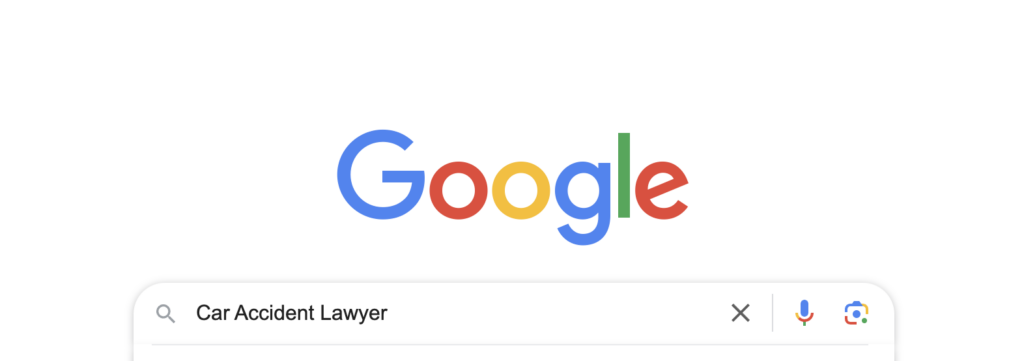
This online visibility is crucial because it connects you with potential clients at the exact moment they need your services.
It’s like having a billboard right where an accident occurred, but instead, you’re present when and where people are actively seeking legal help.
SEO puts you where your potential clients are already looking for you like in the local pack below:
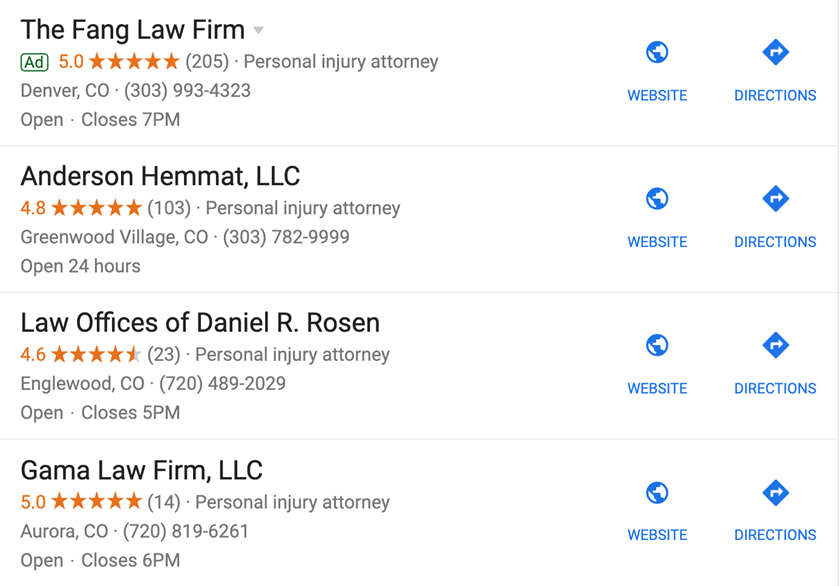
In the following sections, we’ll explore how SEO can help you attract more clients and establish your expertise in personal injury law, giving your firm a competitive edge in your local market.
Why SEO is crucial for law firms
SEO is crucial for law firms because if you’re not showing up when your clients need you, that high value case you want will go to the other guy. The attorney who’s not as good as you, but the one who is doing a better job marketing.
The Competitive Nature of Personal Injury Law
Personal injury is one of the most competitive niches in legal marketing. With thousands of law firms vying for potential clients’ attention, a one-size-fits-all digital strategy won’t cut it. Instead, firms need to tailor their SEO efforts to address the unique challenges of this field. That means understanding the legal nuances of personal injury cases and the specific search behaviors of potential clients—often individuals looking for immediate assistance after suffering injuries in an accident.
Benefits of SEO for personal injury lawyers
By optimizing your website and online presence, you can increase visibility in search results when accident victims are seeking legal help.
This increased visibility translates into more potential clients finding your firm at the exact moment they need your services.
Here are five key benefits of SEO for personal injury lawyers:
- Gives Your Firm a Competitive advantage: Effective SEO can help your firm outrank competitors, capturing more of the local market share for personal injury cases
- Increased local visibility: Helps potential clients in your area find your firm when searching for “personal injury lawyer near me” or “car accident attorney in [your city]”
- Builds credibility and trust: High search rankings signal expertise and authority in personal injury law to potential clients
- Cost-effective client acquisition: Unlike paid advertising, SEO provides long-term benefits without ongoing costs per click or impression
- Educates potential clients: SEO content strategy allows you to provide valuable information on topics like “what to do after a slip and fall accident” or “how to file a workers’ compensation claim”
Implementing Effective SEO Strategies for Personal Injury Lawyers
Personal injury lawyers can significantly improve their online visibility and attract more potential clients by implementing targeted SEO strategies.
Here’s how to get started if you don’t want to dive in right away and hire an agency.
How Personal Injury Clients Search for Lawyers Online
Potential clients needing personal injury services often perform local searches with high intent. They may search for phrases like “best personal injury lawyer near me,” “accident attorney in [city],” or “help after a car accident.” Their queries are urgent, location-specific, and highly competitive. Recognizing this search behavior is the first step in crafting a strategy that attracts these clients to your website.
Key Components of a Successful SEO Strategy
To achieve success, personal injury law firms must focus on several core components:
- Keyword research—identifying both competitive and long-tail keywords that reflect user intent;
- On-page optimization—structuring your content so search engines and clients can easily navigate and understand your offerings;
- Local SEO—capturing the local market by optimizing your presence on platforms like Google Business Profile;
- Content marketing—building authority through in-depth, informative content that addresses client concerns; and
- Link-building—establishing credibility by earning high-quality backlinks from reputable legal and local sources.
With these fundamentals in place, your personal injury SEO strategy will be well-equipped to drive targeted traffic and convert visitors into clients.
Keyword Research + Targeting for Injury Lawyers
Keyword research is the foundation of any successful SEO strategy. For personal injury lawyers, this means identifying the terms and phrases potential clients use when searching for legal help. Some examples include:
- “car accident lawyer [your city]”
- “slip and fall attorney near me”
- “how to file a personal injury claim”
Use tools like Google Keyword Planner or SEMrush to find relevant keywords with good search volume and manageable competition.
For personal injury law firms, it’s about finding the right balance between high-volume search terms and long-tail keywords that reflect specific user intent. Here’s how to build a robust keyword strategy.
Tools for Keyword Research
Several powerful tools can help you dive deeper into keyword data:
- Google Keyword Planner. This tool is free and gives insight into search volumes and competition.
- Ahrefs or SEMrush. These paid platforms offer advanced analytics, including keyword difficulty, click potential, and competitor analysis.
- Ubersuggest. This tool is useful for finding long-tail variations and related keywords that capture specific search queries.
Using these programs and tools, you can generate a comprehensive list of keywords and assess which ones will most likely bring in high-intent traffic.
On-Page SEO for Personal Injury Law Firms
On-page SEO involves optimizing individual web pages to rank higher in search results. For personal injury lawyers, this includes:
- Creating informative content about specific types of injuries or accidents
- Optimizing title tags and meta descriptions with relevant keywords
- Using header tags (H1, H2, H3) to structure content logically
- Including internal links to related pages on your site
For example, you might create a page titled “What to Do After a Car Accident in [Your City]” and optimize it with relevant keywords and helpful information.
Local SEO for Law Firms
Local SEO is crucial for personal injury lawyers, as most clients seek attorneys in their area. To improve your local SEO:
- Maintain an eligible Google Business Profile for each real, staffed location
- Keep accurate name, address, hours, and contact details on important public profiles
- Encourage satisfied clients to leave reviews on Google and other platforms
- Create location content only where your attorneys can serve the reader and add useful local detail
Optimizing Your Google Business Profile
Your Google Business Profile (formerly Google My Business) is often the first point of contact between your firm and potential clients. Here are steps to ensure it’s optimized for maximum local impact:
- Complete your profile. Fill out every section of your profile, including business description, categories, operating hours, and photos.
- Select the correct categories. Choose categories that accurately represent your services. Use the closest available categories that accurately describe your practice.
- Encourage reviews. Positive reviews can boost your local rankings. Actively encourage satisfied clients to leave reviews and respond to them professionally.
- Post regular updates. Use profile updates when they help prospective clients understand a real service, office change, or useful resource; do not treat posting frequency as a ranking guarantee.
Check the profile against Google’s current eligibility and representation rules, then compare its service information and linked page with what your firm actually handles. Track calls and other actions from the profile separately from website organic traffic. Local results vary by searcher and location, so review the markets and matter types in your brief rather than one citywide ranking screenshot.
Building Local Citations and Backlinks
Local citations mention your firm on websites like Yelp, Avvo, or regional business directories. These citations reinforce your firm’s legitimacy and improve local rankings. Additionally:
- Submit your firm to reputable directories. Look for legal directories or local business listings relevant to your area.
- Seek local media coverage. Establish relationships with local news outlets. A feature story or legal commentary can earn you valuable backlinks.
- Partner with community organizations. Sponsor local events or charities, and secure a link from their websites.
Building your online presence and credibility is important when search engines crawl pages and determine what sites to show in results.
Creating Localized Content
Once you get people to your site, you want content that resonates with your local audience. There’s nothing worse than capturing that site traffic but offering readers nothing they want. You want:
- Blog posts. Write about local laws, recent legal developments in your area, or case studies that reflect local challenges.
- Landing pages. Create dedicated landing pages for each location and practice area your firm serves. Optimize each page with location-specific keywords, such as “car accident lawyer in [City].”
- FAQs. Address common legal questions that residents may have. It builds trust and improves your chances of appearing in voice search results.
By focusing on these local SEO strategies, personal injury law firms can capture high-intent, nearby prospects, significantly enhancing client acquisition efforts.
Writing Content That Ranks
High-quality, informative content is at the heart of any successful SEO strategy. For personal injury law firms, content marketing serves two primary purposes: establishing authority in a competitive field and educating potential clients during a vulnerable time.
The Role of Content in Establishing Trust
When someone is injured, they’re often overwhelmed and uncertain about what steps to take. Informative content that addresses their questions can build trust and position your firm as a compassionate authority. Effective content marketing in the personal injury niche should:
- Answer common questions. Provide detailed answers to questions like, “What should I do after a car accident?” or, “How do I know if I have a valid personal injury claim?”
- Explain the legal process. Break down the complex legal process in easy-to-understand language. For example, create a step-by-step guide to filing a personal injury claim.
- Showcase success stories. Use case studies and testimonials to highlight your firm’s expertise and successful outcomes.
You don’t need to “hard sell” potential clients in every post, either. The goal is to get them to feel comfortable and want to schedule a consultation.
Types of Content That Works Well with SEO for Personal Injury Lawyers
Personal injury law firms can benefit from a variety of content formats, including the following:
- Blog posts. Regularly publish articles addressing common personal injury issues, changes in local laws, or tips on dealing with insurance companies.
- Case studies and testimonials. Share detailed accounts of successful cases. It builds credibility and demonstrates your ability to secure results for clients.
- FAQs and guides. Create comprehensive guides on topics like “How to Choose a Personal Injury Lawyer” or “Steps to Take After an Accident.” FAQs addressing frequently asked questions can also help reduce barriers to initial contact.
- Videos and infographics. Visual content can simplify complex legal information. Videos explaining the legal process or infographics summarizing key statistics in personal injury cases can be shared on social media and embedded in your website.
- Client resources. Develop downloadable resources such as checklists or e-books that provide value to potential clients. These can also serve as lead magnets to capture contact information.
Developing a core content marketing strategy means additional opportunities to optimize for SEO purposes and increase your chances of potential clients finding you.
Optimizing Content for SEO
Creating quality content is only half the battle—ensuring it’s optimized for search engines is equally important. Here’s how to do that:
- Keyword integration. Incorporate your target keywords naturally throughout your content. For example, a blog post titled “What to Do After a Car Accident in [City] could seamlessly integrate keywords like “car accident lawyer in [City]” and “[City] car accident attorney.”
- Structured data and formatting. Use header tags (H1, H2, H3) to structure your content, making it easier for search engines to parse and rank. Bulleted lists, numbered steps, and short paragraphs improve readability.
- Internal linking. Link to other relevant pages on your website to keep visitors engaged and to help search engines understand the structure of your site.
Focus on providing real value with your content rather than churning out generic articles. Well-researched, in-depth content tends to perform better and earn more backlinks over time.
Link-Building Strategies for Personal Injury Law SEO
Link-building is one of the most challenging yet critical aspects of SEO. In the competitive field of personal injury law, earning high-quality backlinks signals to search engines that your site is authoritative and trustworthy.
White-Hat Link-Building Techniques
White-hat link-building is essential for establishing your firm’s online authority while complying with search engine guidelines. By employing ethical tactics to earn high-quality backlinks, you improve your site’s credibility and attract more referral traffic.
Guest Posting on Reputable Legal Blogs
Identify reputable legal websites, blogs, or local news outlets that accept guest posts. Write informative, case-specific articles that include a link back to your site. Guest posting not only drives referral traffic but also strengthens your site’s authority.
Build Relationships with Local News Outlets
Personal injury stories often attract local media attention. Establish relationships with local news stations, newspapers, or online publications. Offering experienced commentary on local accidents or legal changes can earn you valuable backlinks.
Leverage Client Testimonials and Case Studies
Develop detailed case studies or client success stories and encourage publication on partner websites, directories, or legal forums. These real-life examples serve as social proof and provide natural backlink opportunities.
Best Practices for Link-Building
Here are some important things to keep in mind while working on a link-building strategy:
- Focus on quality, not quantity. Avoid spammy tactics. It’s better to have a handful of links from highly authoritative, relevant sites than numerous low-quality backlinks.
- Monitor your backlink profile. Use tools like Ahrefs or SEMrush to check the quality of your backlinks regularly. Disavow any low-quality or spam links that could harm your rankings.
- Submit to local and industry-specific directories. Submit your firm to legal directories, local business listings, and bar association websites. These citations improve your local SEO and serve as valuable backlinks.
By adopting these link-building strategies, your personal injury law firm can enhance its online credibility and climb higher in the search rankings.
Technical SEO for Personal Injury Lawyers
Technical SEO ensures your website is easy for search engines to crawl and index. Key aspects include:
- Improving page load speed
- Making your site mobile-friendly
- Implementing a secure HTTPS connection
- Creating an XML sitemap
- Using schema markup for law firms
By addressing these technical aspects, you’ll improve your site’s overall performance in search results.
Implementing these SEO strategies can help your personal injury law firm attract more potential clients and establish a stronger online presence. Remember, SEO is an ongoing process, so regularly review and update your strategies to maintain and improve your search rankings.
How should a PI firm measure SEO results?
Start with the firm outcome, then trace backward. Count distinct inquiries, attorney-reviewed opportunities, signed agreements, and opened matters under documented definitions. Keep pending matters and uncertain sources visible. A form submission is an inquiry; it is not automatically a qualified case or a signed client.
- Search visibility: Use Google Search Console to review relevant nonbrand queries, pages, clicks, impressions, and indexing. Compare matched periods and the target market; an average position is context, not a case count.
- Site activity: Use analytics to check organic landing sessions and configured call or form events, while testing that the phone and form actually reach intake.
- Intake and case outcomes: Reconcile duplicate calls and forms with intake and CRM records. Review practice and geography fit, contact, consultation, signing, opened matters, and reasons for loss with enough time for the cohort to mature.
When visibility rises but suitable consultations do not, inspect the query, page promise, contact path, response, and review capacity before ordering more content. If the firm cannot connect source records to later outcomes, report the stages it can verify and make attribution improvement part of the plan. See our guide to connecting intake and marketing.
How can you evaluate a personal injury SEO proposal?
Ask the provider to show its first priorities for your matter mix and markets, the page and local-profile changes it would make, who owns each deliverable, and what it would defer. Request a baseline and a reporting example that separates search visibility, inquiries, signed agreements, and opened matters. A guaranteed ranking or a traffic forecast without a case and intake plan is not enough to approve the investment.
Juris Digital’s Steve King put the goal question plainly in The Non-Billable Hour, episode 9: “How many cases are you trying to sign?” In the surrounding discussion, he asks firms and providers to work from the firm’s goals and understand where calls fail to become cases. The question does not promise any particular result; it tells both sides what the plan needs to explain.
- Scope: Which practice and location pages, Google Business Profile work, technical repairs, and content or authority work come first, and why?
- Ownership: Who controls the website, profiles, content, analytics, and access if the relationship ends?
- Feedback: How will the firm report declined, pending, qualified, signed, and opened matters without exposing unnecessary client details?
- Review: When will you inspect completed work and early signals, and when will enough matters have matured to revisit the investment?
Plan the next step for your firm
Bring your case and market brief, current search and intake reports, and the proposal you are weighing to a Juris Digital discovery conversation. We can review the first bottleneck, discuss a realistic scope, and explain what evidence would show whether the work is helping. The appropriate first step may be a page, local visibility, technical, or intake fix; no ranking, case volume, or timing is guaranteed by the conversation.