Your personal injury firm needs more signed cases. Should you buy personal injury leads from a vendor, or invest in marketing that brings prospective clients to your own firm? The answer depends on case fit, what you pay per retained matter, how quickly your intake team follows up, and how much control you want over the source of future inquiries.

But is buying personal injury leads the best way to invest your growth dollars?
Or, should you invest in building marketing assets whereby you generate your own personal injury leads and cut out the middle man?
Here’s my best advice as someone who has helped grow dozens of personal injury law firms over the last decade:
Buying leads can be a useful short-term source of inquiries when the vendor delivers matters your firm can handle and the cost per signed case works. Building your own website, content, reputation, and referral paths can give you more control over future demand, but those assets require investment and may take time to perform. Compare the two using qualified inquiries and retained matters, not the number of leads delivered.
Some firms use purchased leads while building their own personal injury marketing channels. If you must choose one first, look at your cash runway, intake capacity, target case mix, vendor terms, and the time your marketing plan needs to work. A channel that supplies more calls can still be the worse investment if few become appropriate signed matters.
At Juris Digital we do not sell personal injury leads. We help law firms build digital marketing assets they control, then measure whether those assets bring in the cases the firm wants.
If you want to compare those options for your firm, discuss your acquisition plan with Juris Digital.
Scope: This guide compares buying leads with building your own demand. It does not rank lead vendors. Ask any vendor for written terms and test results against your firm’s actual intake and retained-case data before committing to a larger purchase.
Lead Generation Companies vs. Law Firm Advertising Services
Before we go any further, there is an important distinction that needs to be made between companies that generate and sell you leads, and companies that advertise your law firm on their web property (law firm advertising platforms).
Personal Injury Lead Generation Companies
If you search the web for something like “personal injury leads” you are going to find a smattering of companies who offer something like this:

Lead vendors may use TV, radio, SEO, PPC, social media, or other channels to generate inquiries and pass them to participating firms. Ask how each inquiry was generated, whether it is exclusive, what counts as a billable lead, and when a duplicate or unsuitable inquiry is credited.
Law Firm Advertising Platforms
On the other hand, there are a plethora of law firm advertising platforms where you can pay to have your firm listed. Examples of this sort of service include websites like Avvo.com, FindLaw.com, and Nolo.com.
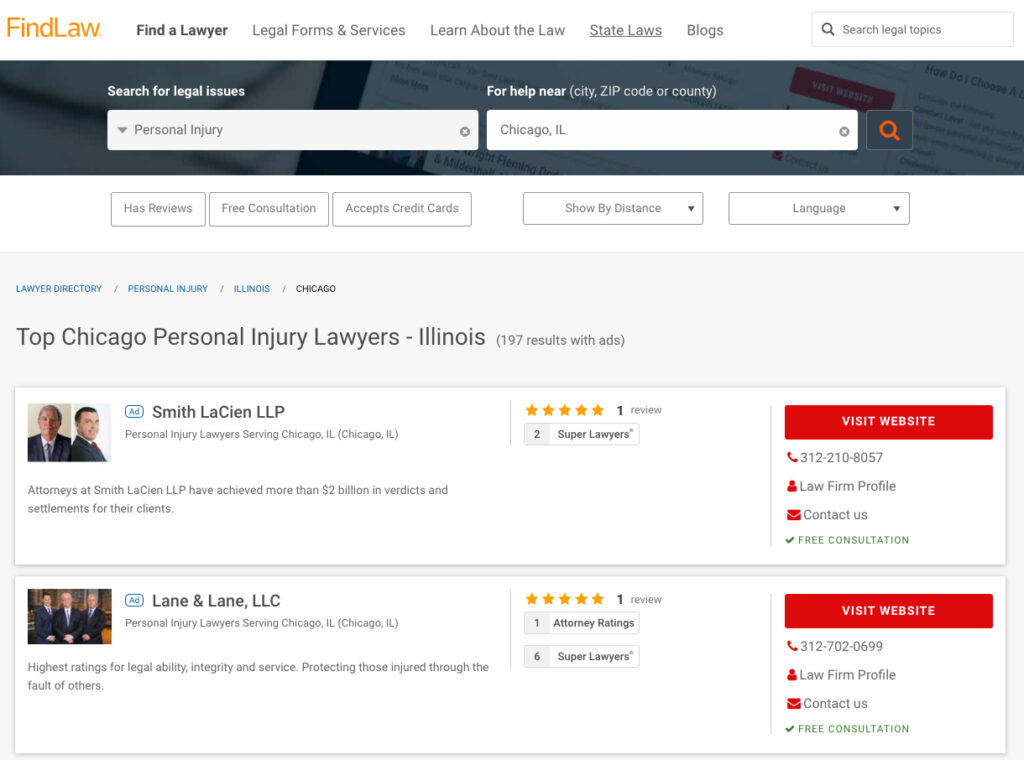
Some of these platforms offer some version of a pay-per-lead model. Others simply charge a fee for ad space and do not take the number of leads generated into account whatsoever.
Google offers a pay-per-lead ad service called Google Local Service Ads (LSAs) which it began offering to law firms in 2020. Here’s what these ads look like when someone is searching for a personal injury lawyer on Google:
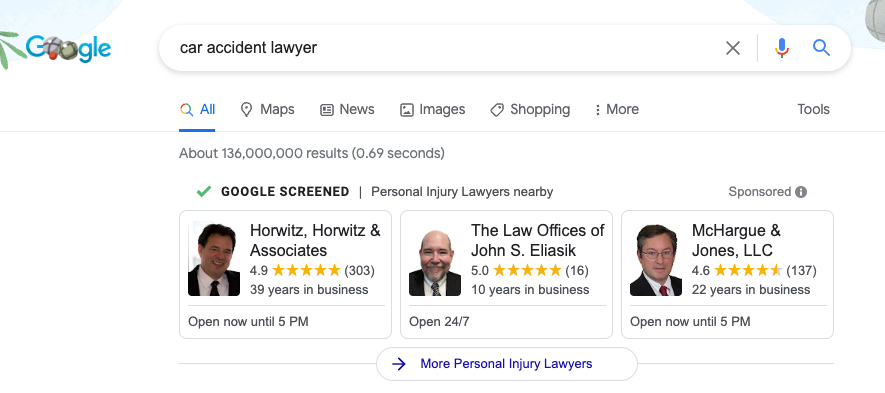
It’s important to distinguish between buying leads from a lead generation company and advertising your law firm on a platform that may help generate leads for your firm.
A vendor-generated inquiry may arrive with little familiarity with your firm, especially if the vendor markets a general legal-help brand or sends the same inquiry to multiple firms. Confirm what the prospective client was told before your intake team calls.
On a directory or ad platform, a prospective client may see your firm’s name before contacting you. How much they know depends on the placement and the path they took; check that experience rather than assuming every inquiry recognizes your brand.
These are different buying models. Compare the actual client journey, contract terms, and retained-case economics for each.
5 Questions to Ask Yourself Before Paying for Personal Injury Leads
Before buying personal injury leads, ask the vendor to show what it can deliver. Then ask these five questions about your firm’s own intake and case criteria:
Do I have a system in place to measure my cost per acquisition?
Just like every other marketing initiative, it’s important that you have tracking in place to determine your ROI before launching a campaign. Ultimately this is how you will find out if it’s worth the investment for your law firm.
Use one definition across vendors and owned channels: cost per signed case = total channel spend ÷ signed cases attributed to that channel. Keep raw inquiries, qualified inquiries, consultations, signed cases, and fees collected in separate columns. Include staff time and creative or agency costs when comparing the full economics. The figures below are hypothetical, not Juris Digital or client results.
| Hypothetical channel | Inquiries | Qualified inquiries | Signed cases | Total spend | Cost per signed case |
|---|---|---|---|---|---|
| Purchased leads | 40 | 10 | 3 | $12,000 | $4,000 |
| Owned marketing | 25 | 12 | 4 | $12,000 | $3,000 |
In this illustration, the owned channel has fewer inquiries but more signed cases. That does not prove it will outperform purchased leads for your firm. Compare the same period, case criteria, attribution rules, and total costs; then review collected fees and profitability separately from lead counts.
Am I confident in my ability to sign up the good leads at a high rate?
Many agreements charge for an inquiry rather than a signed case. Read the contract’s billable-lead definition and compare it with the matters your firm can actually accept. Ask yourself:
- Will I respond to 100% of the leads immediately, day or night?
- Will I be persistent in following up with good leads?
- Do I have an effective lead qualification system in place?
- Am I willing and able to deploy salesmanship to convince good leads to sign with my firm?
If the answer to any of these questions is not a resounding Yes, buying leads might not be right for you.
Am I confident in my ability to effectively follow up with large numbers of leads?
Do not assume a standard lead-to-case rate. Before scaling a vendor, measure how many inquiries your team reaches, how many fit your case criteria, how many book a consultation, and how many sign. If staff cannot respond and follow up reliably, buying more inquiries may increase cost without increasing retained matters.
Am I willing and able to take on different types of cases, including lower-value matters?
If your firm accepts a narrow set of serious injury or wrongful death matters, ask the vendor for a sample of inquiries that meet those criteria in your market. Agree in writing on case-type filters and credits for inquiries outside scope. Count qualified matters and retained cases for your target mix, rather than assuming that vendor volume translates into the cases you want.
Is my geographic market large enough to make this viable?
Ask for delivery history in the specific counties and case categories you serve. A national volume claim does not show how many suitable inquiries a vendor can supply to your firm. Set a short test period and a minimum quality definition before committing to a larger purchase.
The Pros and Cons of Buying Personal Injury Leads
There are some obvious benefits to purchasing personal injury leads from a lead generation company rather than investing in marketing and advertising to generate those leads yourself. There are also drawbacks. Here are the pros and cons that I find most important for law firms to consider:
The Benefits of Buying Personal Injury Leads
- Speed – A vendor with suitable inventory may deliver inquiries sooner than a new organic marketing program can. Ask when delivery would begin and how many inquiries match your criteria.
- Additional volume – Purchased inquiries may add to your existing pipeline, especially while your own channels are developing. Track the qualified share and signed cases alongside total volume.
- A defined purchase – A vendor contract can specify price, delivery, and credits. Your firm still needs to review the terms, handle intake, and measure case outcomes.
The Drawbacks of Buying Personal Injury Leads
- Paying for unsuitable inquiries – Some contracts bill for an inquiry even when it does not fit your case criteria. The written filters and credit policy determine how much of that risk your firm carries.
- Explaining your firm from the first call – If the prospective client contacted a general legal-help brand, your intake team may need to explain who you are and why your firm is a fit before discussing representation.
- Limited control of the source – When the vendor controls the audience and delivery, future inquiry volume depends on its terms and continued availability. Owned pages, creative, and first-party relationships may keep producing value, although they also require upkeep and do not guarantee results.
Now let’s look at the pros and cons of investing in marketing in order to generate your own leads.
What to verify in a lead vendor’s proposal
Before you compare a vendor’s quoted price with SEO or advertising spend, get answers your intake team can check in a short pilot:
- Origin and client expectations: Where did the inquiry come from, what was the person told, and did they ask to hear from your firm?
- Exclusivity: Is the inquiry sent only to you? If shared, how many firms receive it and when?
- Case and market fit: Which incident types, locations, dates, and referral exclusions can you specify?
- Credits and cancellation: What happens when a number is invalid, the inquiry is duplicate, the matter is outside scope, or the vendor misses the agreed delivery standard?
- Measurement: Can you tie each delivered inquiry to a source, intake outcome, signed agreement, and collected fee without counting the same person twice?
Have your firm review the proposal and outreach process against the rules that apply in its jurisdictions. If a vendor will not provide enough detail to evaluate lead quality and contact practices, that uncertainty belongs in the purchasing decision.
The Pros and Cons of Investing in Marketing
Building your own acquisition channels involves different costs and responsibilities. Consider what your firm will control, how long the work may take, and what staff participation it requires.
The Benefits of Investing in Marketing
- You can build assets your firm controls – Confirm ownership of the website, content, creative, accounts, and data in your provider agreement. Those assets can support future demand, but they need ongoing maintenance and measurement.
- Prospective clients can learn about your firm first – Useful pages and clear case examples may help a person understand your practice before contacting intake. Your team still needs to respond, qualify, and explain the next step.
- You can diversify inquiry sources – A mix of search, referrals, advertising, and owned content may reduce dependence on one vendor. Check the actual source of each signed case; several channels can still depend on the same platform.
The Drawbacks of Investing in Marketing
- Some channels take time – New SEO and content work may take months to produce qualified inquiries. Paid advertising can begin sooner, but it also needs budget, testing, and intake capacity. Match the plan to your firm’s cash runway.
- It requires your participation – Lawyers and intake staff need to explain which cases fit, review messaging, and provide examples of client questions. Purchased leads also require staff training and feedback on lead quality.
- It’s Not Entirely Predictable – When you invest in marketing, you are competing for a finite number of potential new clients. There are no guarantees that spending more money will mean getting more new business. Your success will rely on the strategic competency and the quality of execution of your marketing provider.
Wrapping it Up
Juris Digital helps firms invest in channels they can build and measure, including web design, branding, SEO for Lawyers, and content marketing. The right mix depends on your case goals, market, budget, and intake results.
We also recognize the concerns that many firms have with investing in marketing, and we know that under certain circumstances buying personal injury case leads can generate reliable revenue and a positive return on investment.
If you’re deciding whether to buy more inquiries or build a stronger source of personal injury clients, bring your case criteria, vendor terms, intake results, and current marketing costs to a Juris Digital discovery call. We can discuss where the bottleneck is and whether our services fit your plan.
Last updated: