You want to leave Scorpion. But you like your website, and the thought of starting that project again is making you hesitate.
I don't think changing marketing companies should mean throwing away website work you still like.
You've already spent time reviewing layouts, approving content and gathering attorney photos. Starting again can feel like paying twice for work that still represents your firm well.
Moving to WordPress may require rebuilding the system behind your site. It doesn't necessarily require a different-looking website.
That's the distinction I think attorneys need to understand before deciding what leaving actually involves.
You don't have to redesign everything to leave
What a prospective client sees is one part of your website. The system that lets your staff edit a biography, publishes pages and connects a form to your intake process is another.
Changing that system doesn't automatically mean changing your logo, colors, content or page layouts.
If those things still represent your firm well, there may be no business reason to replace them. A person referred by a former client should still recognize the firm. An attorney shouldn't have to rewrite a useful biography simply because the marketing relationship changed.
We've rebuilt websites for firms leaving Scorpion. That experience is part of why I think attorneys should separate a platform move from a redesign.
Keeping an approved design can reduce design work and may lower the cost or shorten the project compared with a full custom redesign. It doesn't remove the work of building and testing the website. The available materials and the functions that need rebuilding determine the scope.
There can also be sensible changes along the way. An outdated attorney profile needs updating. A phone link that's difficult to use on mobile needs attention. Those are specific problems to solve, rather than a reason to throw out everything.
Our law firm website design service covers the broader work involved in building a site. For this decision, start with what your firm wants to keep.
The part that has to change is the platform
This is where the word “ownership” can create confusion.
Scorpion's FAQ says customers own their website after completing their contract, including domains, content and imagery. It also describes its CMS, or content management system, as proprietary. Its stated handoff for customers leaving after fulfilling their contract includes static files, design assets and content. Another vendor needs to rebuild the site on a chosen CMS, such as WordPress.
Those are different things.
Design assets and content can give a developer the materials to recreate the website. They aren't necessarily a running system that another company can pick up and host unchanged.
A form may look identical after the move, for example. The new site still needs to collect the submission, deliver it to the right person and connect it to whatever intake tools your firm uses.
Moving to WordPress means building that functionality independently using materials your firm is entitled to reuse. It doesn't mean copying Scorpion's proprietary CMS code.
The public FAQ is useful context. Your signed agreement and confirmed handoff determine your firm's situation. Get clarity on what will be supplied and when, before building a transition schedule around assumptions.
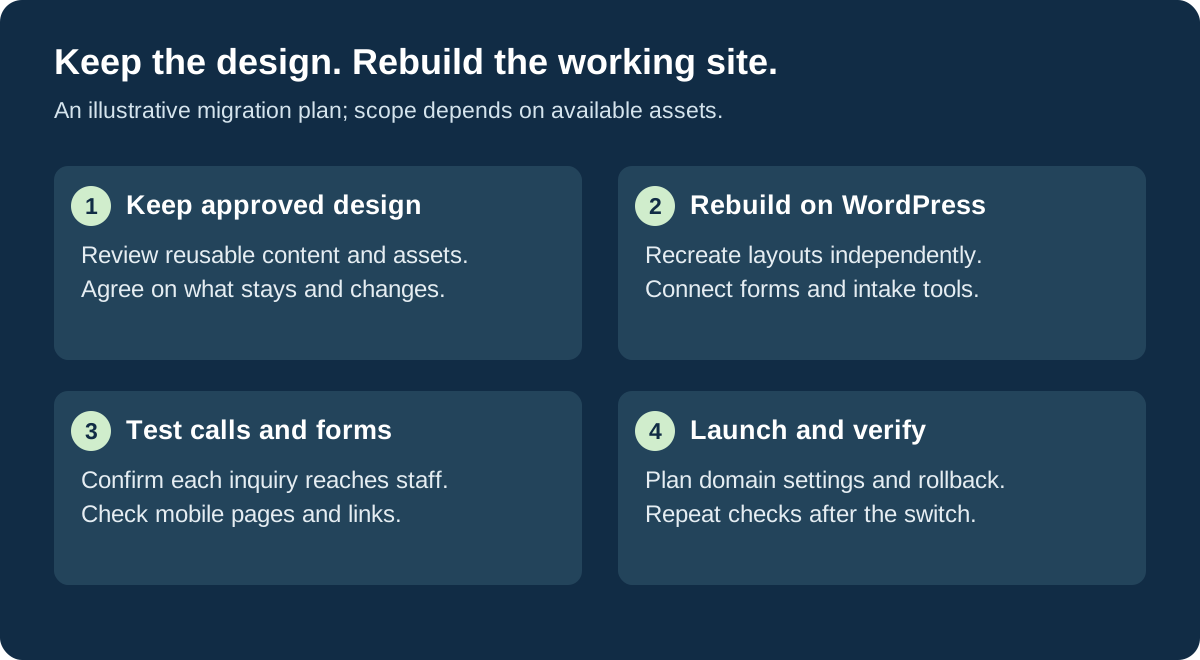
- Keep approved designReview reusable assets and agree on scope.
- Rebuild on WordPressRecreate layouts and connect intake tools.
- Test calls and formsConfirm each inquiry reaches the intended staff.
- Launch and verifyPlan domain settings, rollback and repeat checks.
Looking the same isn't enough
A website can look right and still fail at the thing your firm needs it to do.
Someone submits a form. Does your staff receive it? Someone taps the phone number. Does it call the right number? Someone books a consultation. Does the appointment appear where the person handling intake expects it?
That's why I wouldn't judge a move only by screenshots.
Phone tracking, chat, scheduling and intake connections may depend on services outside the website itself. Each needs review. If a tool is changing, your staff should understand how that affects their normal process before launch.
The developer handles the technical work. Your intake team confirms the result: the test inquiry arrived, the notification worked, and someone can respond.
That division matters for a busy firm. You shouldn't need an attorney managing form configuration between court appearances. You do need someone who can confirm who receives inquiries, identify the tools the firm depends on and collect approvals.
The cancellation date matters here, too. Confirm when the current services end and when assets and access become available. Build and test the replacement before coordinating the switch, with a recovery plan if a launch check fails.
Keeping the design can make the project narrower. It can't tell you, by itself, how long the move will take.
Protect what already helps people find you
The other concern is usually Google.
If people already find your firm through useful practice-area pages or articles, changing platforms isn't a reason to discard them.
Preserve the domain and existing page addresses where they still make sense. Carry over useful content and appropriate page titles and descriptions. Check that the new site allows search engines to find the pages you intend to publish.
If an address changes, the old page should lead to its relevant replacement. Google's site-move guidance explains the mapping and redirect work involved when URLs change.
This is also a reason to keep optional changes under control. Changing the platform, rewriting every page and changing every address at once gives your team more things to verify and makes later problems harder to investigate.
No provider can guarantee unchanged rankings or uninterrupted service. What you can ask for is a clear record of what stays, what changes, what gets tested and what the team will watch after launch.
Search visibility and inquiries both deserve attention. A technically successful launch still needs review through the lens of whether prospective clients can find and contact the firm.
Make the next move easier
Moving to WordPress should also make the next provider decision clearer.
WordPress is open-source software. Its migration documentation explains moving an installation between servers. That gives your firm a practical foundation for portability, provided you have the necessary access, files and database.
But “it's WordPress” isn't the whole answer.
Your firm should know who controls the domain registration and hosting account, who has administrator access, and who maintains and backs up the site. A WordPress content export alone isn't a complete working-site backup. Recovery also needs the database and site files. Paid tools and licensed assets need their own review.
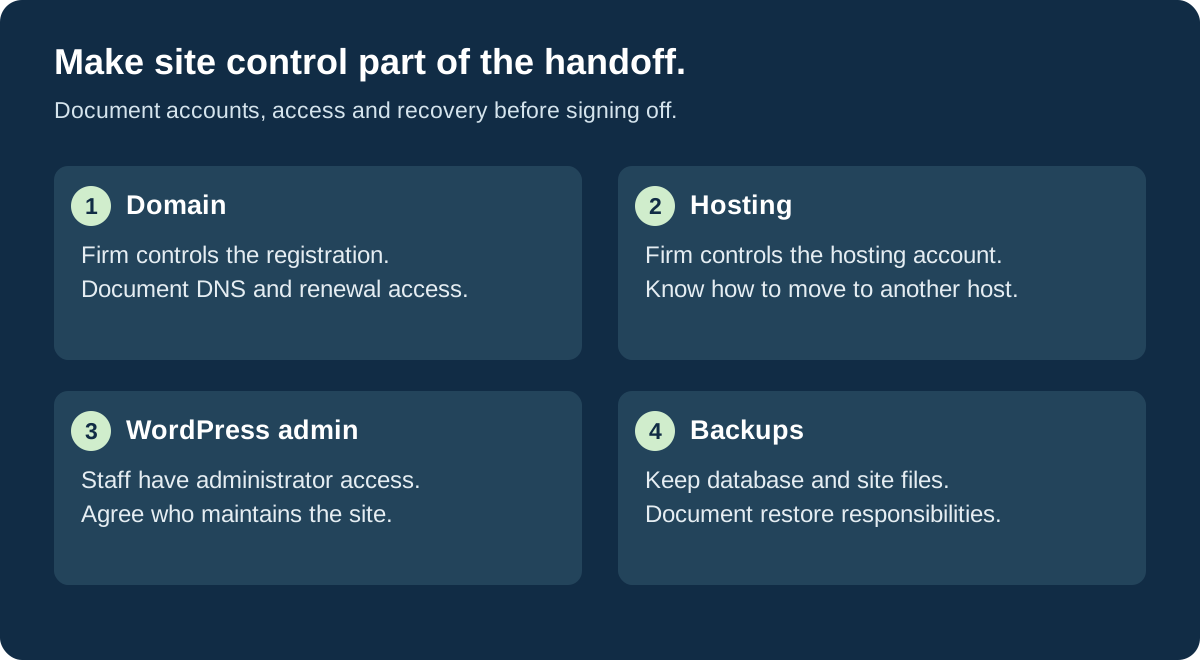
- DomainFirm controls registration, DNS and renewals.
- HostingFirm controls hosting and can change hosts.
- WordPress administratorStaff have access; maintenance responsibilities are clear.
- BackupsKeep the database and site files, with a documented recovery process.
Our explanation of WordPress as a CMS for law firms gives more context on that choice. Our Scorpion marketing review covers the broader provider decision; this guide focuses on the website part of leaving.
I think a good transition preserves useful work and makes the firm's next decision easier. You can keep a design you like while rebuilding the working site on a different foundation.
We've done these moves before. If seeing an example would help you understand what that looks like, we're happy to show you.
Last updated: