This study was originally published in August 2021 and has since be updated for clarity.
We do digital marketing for law firms. As such, there is nothing more important for us to understand than how people find and hire a lawyer.
We have a ton of data and fancy tools that help with this. But their numbers don’t always tell the whole story. Sometimes, to better understand how people think and why they make the decisions they do, you have to do something crazy: Ask them.
So that’s what we did. We gathered 25 participants and we conducted a good old-fashioned focus group from a specific market. The video below is about 30 minutes long and contains every single response to each question that we asked all of our participants. We suggest you start here, as there are so many great nuggets that ought to get your creative juices flowing:
Questions and Responses
Next, we’ve distilled all of the responses below so that you can glean quick insights into our findings:
1. Have you ever hired an attorney before? If so, how did you find them?
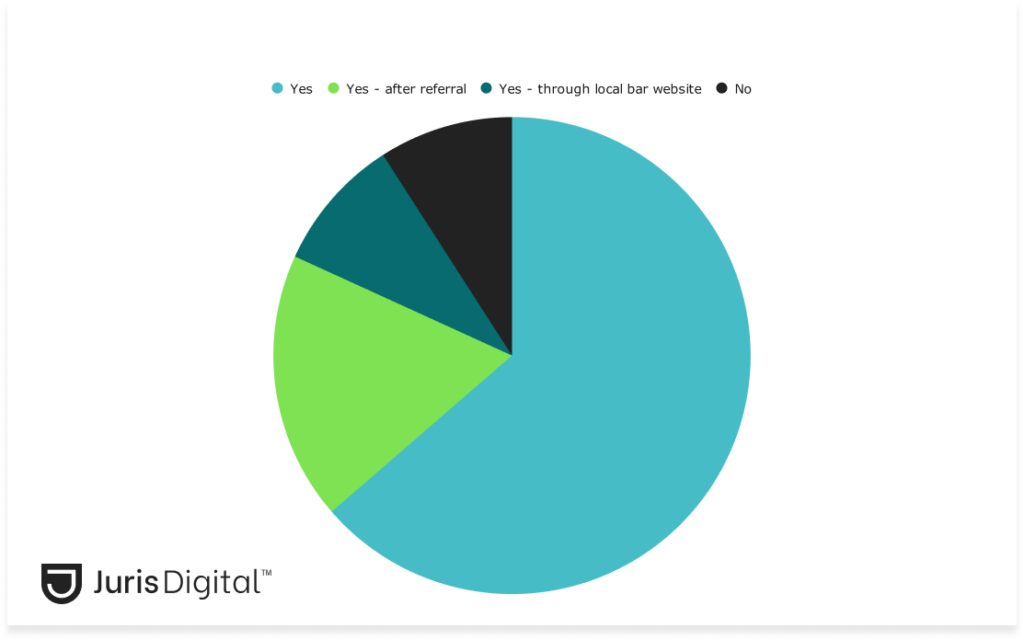
11 of the 25 participants answered that they had hired an attorney before. Here’s how those 11 found the attorney they hired:
Responses:
- Yes – Yellow Pages
- Yes – Through Work
- Yes – Through Real Estate Attorney
- Yes – Hired via past reference
- yes – Through Google
- Yes – Referral
- Yes – Word of mouth
- Yes – Commercial
- Yes – Google Search
- Yes – friends and family
- Yes – Met up with LGBT center
That’s a pretty clean split. Of the 11 people who had previously hired an attorney, 6 found one through some form of personal referral, word-of-mouth, or existing relationship. The other 5 used Google, a commercial, or a directory. What that tells us: even among people who’ve done this before, there’s no single dominant channel. Both referral and online search have real reach, and your marketing strategy needs to hold up in both worlds.
2. What factors are important to you when looking for an attorney?
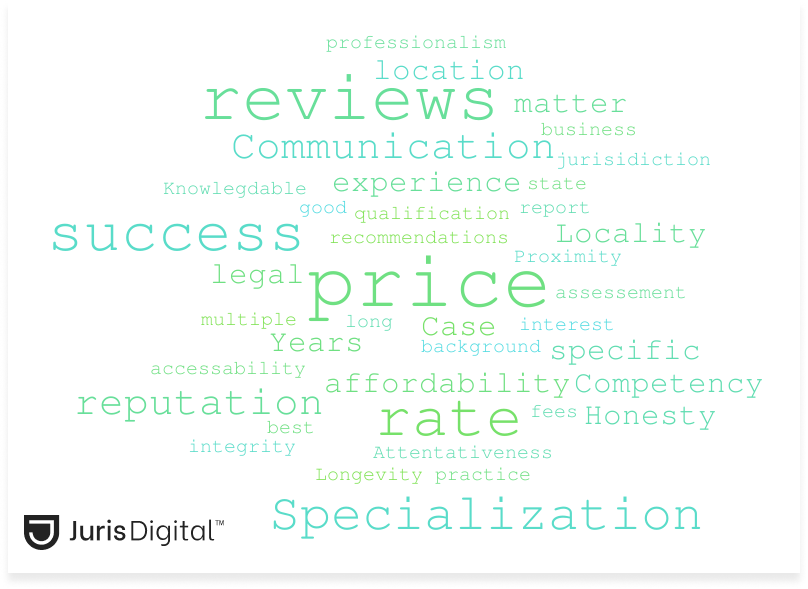
A key takeaway here is not to assume that all clients do not define success by the same metrics. Using data like this can help you tailor your marketing efforts to address not just one, but all of your potential clients pain points in your messaging.
If you scan the raw responses, reviews show up more than almost anything else. We counted 9 participants who specifically named reviews as a factor when evaluating an attorney. Price and specialization were close behind. The practical implication: reviews aren’t just a nice-to-have. They’re one of the first signals people use to filter you in or out.
Raw responses:
- Communication, reviews, price
- Specialization in specific case, success rate, locality
- Price, recommendations
- Proximity, success rate, has my best interest
- Reputation and price
- Specialization, location
- Communication, affordability
- Knowlegdable, reviews
- Success rate, price
- Attentativeness, good report, fees
- Competency in the legal matter
- Competency in the legal matter
- Honesty, affordability
- Years of experience, background
- Years of experience, price, location, accessability
- Case assessement, reputation, price
- How long they’ve been in business, multiple state jurisidiction
- Reviews, specialization
- Reviews, price
- Specialization in specific practice
- Locality, reviews
- Communication, professionalism, reputation
- Longevity, success rate
- Success rate, qualification, reviews
- Honesty, integrity
3. Would you ever look for an attorney online?
4. If you were injured in an accident and needed to hire an attorney, how would you go about finding one?
An interesting takeaway from this data is that even though many of the participants would ask a friend or a family member, they would also look online as a part of their search to make sure they were hiring the right attorney for them.
Free consultations showed up twice in this data. Item 9 listed it as their entire search strategy. The comments section has it again. That’s not a coincidence. For a lot of people, a free consultation isn’t a pricing detail. It’s a trust signal. It lowers the perceived risk of making contact. If your firm offers free consultations and your website buries that, you’re giving away a real advantage.
Responses:
- Yelp, Google
- Ask family and friends, then do a Google Search
- Ask family and friends
- Internet, family and friends
- Friends and family, then Google
- Friends and family, then Google
- Google search
- Yelp, Google
- Free consultation
- Google search
- Legal shield
- Personal recomendations, then internet search
- Google search, then friends
- Google search
- Ask friends, then Google search
- Friends and family, then Google
- Friends circle through church
- Google Search
- Google Search, friends and family
- Google Search, friends and family
- Friends and family
Interesting comments:
“I would start with a broad search and narrow it down from there.”
“I would look up a local attorney online.”
“I’d look for a lawyer who I have seen on billboards and commercials.”
“I would want to know if they give a free consultation.”
“I’d Google names of people that I’ve heard on the radio.”
“I would Google local people and read reviews.”
“I would talk to my accountant/financial advisor to get a recommendation.”
“I would use Nextdoor.com and look at the Florida Bar website.”
“I would use the term lawyer accident injury.”
5. What websites would you trust to find an attorney?
Notice how prominent Google was. It’s also interesting that some people already have an idea of where to look online. This goes back to our theory of barnacle SEO or share of search. You want to be everywhere your potential clients are looking (if it makes sense in your market/budget).
Three of 19 participants named a bar association website as a trusted source. That’s a meaningful share. The Florida Bar, the ABA, and the Santa Clara Bar Association all came up by name. Bar association directories carry a credibility signal that general directories don’t. The people who go to those sites are already looking for something credible. If your firm isn’t listed and active on your state bar’s referral resources, you’re invisible to that segment.
Responses:
- Google, Yelp
- Legal shield
- Google, Yelp, Yellow Pages, Yahoo
- Super Lawyers.com
- Legal Zoom
- Florida Bar, American Bar, Google Search
- Legal Shield
- Google, Yelp
- Santa Clara Bar Asscocaiton
6. Type in what you would type if you were injured and looking for an attorney
This one is for SEO nerds. We asked the same question but got a variety of different responses. A few things to highlight here are:
- Many of the participants types in a city name, zip code, or state as a geo modifier. [Are you rank tracking these keywords?]
- Notice how several people used “Near Me” without being promoted
- Notice how many keyword variations there are even from a small sample size
Results
- Injury attorney san francisco
- injury attorney near me
- local lawyers
- injury law group
- attorney Christian
- injury lawyers
- personal injury lawyer bangor Maine
- personal injury lawyer tyler, texas
- personal injurt lawyer near 39466
- personal injury bosrd certified attorney near me
- personal injury lawyer san francisco
- personal injury lawyer
- free consultation injury
- personal injurty lawyer sunnyvale
- personal injury lawyer san jose
- attorney injury san jose
- injury lawyer san hose
- attorney for injury accident
- accident attorney
- 1-800-lawyer
- bay area best injury lawyer
- san jose personal injury attorney
7. Where would you click first in the search results?
If you have the time, make sure to watch these videos. Search behavior is very interesting. Some people skip the ads, some click on the ads and then click to organic, but the search behavior is different between each person.
Key Takeaway: Don’t make assumptions in your market! Test! Also focus on being everywhere you can 🙂
The local pack dominated click behavior in this group. That’s not a coincidence. Google’s local pack pulls directly from Google Business Profile data, which means your GBP isn’t just a listing. It’s the thing that determines whether you even appear in the most-clicked part of the search results. Reviews, photos, business hours, response time to messages, and your primary category all affect how prominently you show up. If you haven’t fully optimized your GBP, the local pack clicks in this data aren’t going to you.
Results
- Browse the first few options, would click on the local pack
- Would click on lawyers.com
- Would scroll down and click on best Hayward lawyers
- Would scroll down and click on local links
- Would scroll down and click on Florida Bar Association
- Would scroll down and click on the local pack and view all
- Click on free accident – Ad for findlegal.com
- Click on the general questions for a personal injury lawyer
- Click on Find Law
- Click on Harris Law
- Click on the map to locate the nearest attorney
- Click on a lawyer entry from the local pack
- Search Yelp
- Click on an entry in the local pack
Interesting comments:
“I wouldn’t click on Google screened right away because I know those are ads.”
“I would specify car accident lawyer and look at ratings. I’d start with the first entry and realized they had a free consultation.”
“I would check to see how their website looks and how long they have been in business.”
“I would ignore the ads, ignore super lawyers.”
“I noticed the words free and legal.”
“I would want to educate myself on what they do.”
“I immediately noticed the amount of 5-star reviews it has.”
“I would scroll down past the ads.”
8. What factors would you consider before contacting one of these attorneys?
Don’t ignore the importance of reviews from these answers 🙂 but while reviews are important for some, other factors may be important for other clients.
One response that’s easy to overlook: respondent 2 said “professionalism, website, and fees.” That’s not a throwaway answer. Website quality shows up because people use it as a credibility signal before they ever pick up the phone. A poorly designed or outdated site doesn’t just look bad. It actively filters people out. Your site isn’t just a funnel. It’s a filter that runs in both directions.
Responses
- Success rate and website visit. Type of cases they specialize in
- Professionalism, website, and fees
- Where they place on the listings on the first page
- Name of the firm and fees
- Human contact vs. call center – Success rate, availability
- Experience, testimonials
- Ratings and experience
- Open office hours and talk to a person, who specializes in personal injury
- High reviews
- Location, rankings, success ratings, small practice or big practice
- Reviews
- Reviews, fees
- Location, years in business
- Ratings
- Proximity, ratings, reviews, success rate, experience
- Specialization
- Specialization, reviews, free consultation
Experience, longevity, and success rate showed up across multiple Q8 responses. Those are the next best thing to checking credentials. Most people can’t read a bar license or evaluate a J.D. But they can count years in business and look up case results. If those numbers are buried on your website, you’re losing to firms that put them front and center. Put them on your homepage and your Google Business Profile. Make the credentials easy to find before someone has to go looking.
9. What would be your preferred method of contacting an attorney?
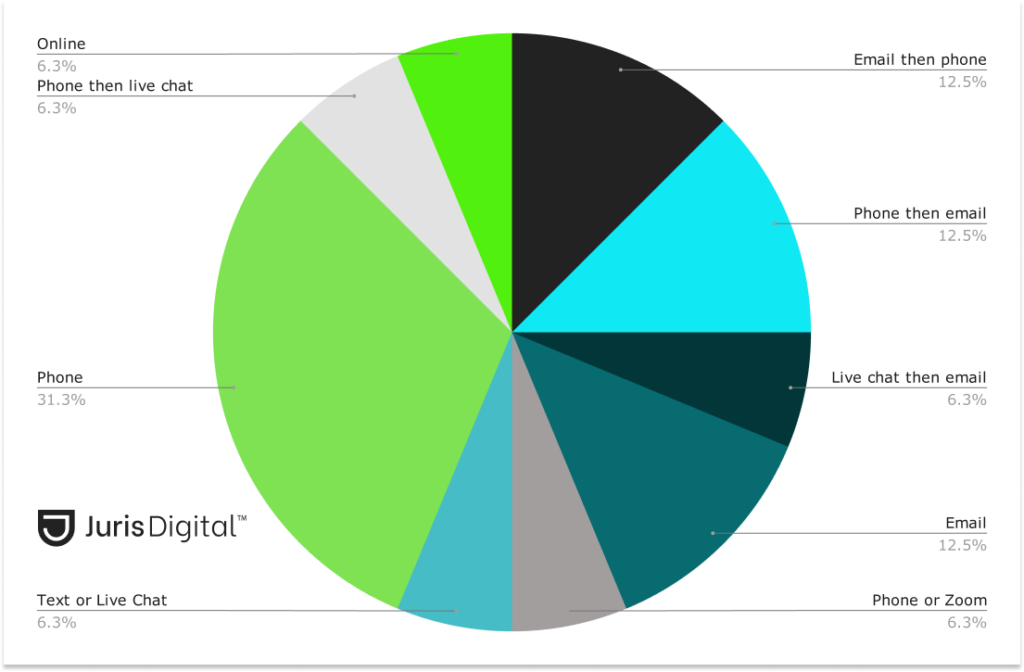
Interestingly this aligns with our current data where most of our clients cases are signed from phone calls vs. other electronic methods. Make sure you answer your phone promptly and with a personal touch.
More interesting comments:
“I don’t like live chat because I know it’s not a real person”
“Before calling I would want assurance that it’s not a call center”
“I would use send a call request function on Google screened”
These three comments are all describing the same friction point. Live chat that feels automated kills trust before contact even happens. A phone experience that sounds like a call center does the same thing after contact starts. In both cases, people are trying to reach a real human and bailing when the signals say they won’t get one. The fix isn’t complicated, but it requires intention: live chat should be staffed by a real person, or labeled so people know what they’re getting into, and calls should be answered by a person who knows what the firm does.
That’s all, folks!
Was there anything you found especially surprising? What changes would you make to your digital marketing efforts based on these responses? Please let us know in the comments!
And if this got you thinking about your own law firm’s marketing, take a look at the law firm marketing services we offer here at Juris Digital. We’d love to help.
Last updated: