
Backlinks continue to be the primary driver of high search engine rankings.
Why? Because backlinks are normally very difficult to get, and a site that does get them is seen by Google as an “authority” website.
One of the simplest ways to get backlinks is to buy them. But are paid links effective in terms of boosting your website’s rankings?
Let’s explore.
Google says they don’t want people buying links
It’s no secret that paid links go against Google’s quality guidelines. Google has held this position for years:
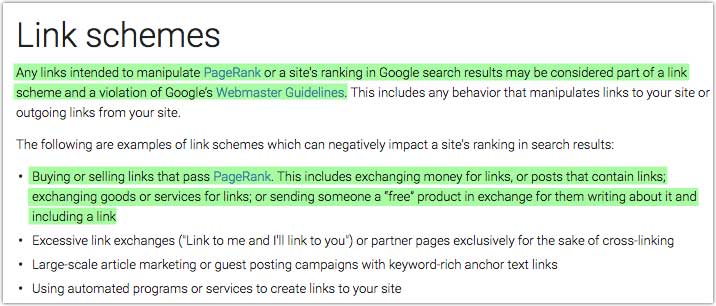
In theory, there are two ways Google can hurt your site for buying links. The first is a manual action, which is when a Google employee personally reviews your backlinks and flags your site. You get a notification about it in the free Google Search Console tool. The second is automatic. Google’s systems spot the paid links on their own and quietly stop giving your site credit for them. Both are real problems. Manual actions are just rarer.
But like many of Google’s statements regarding SEO tactics, one look at real world search results indicates that not only are paid links not punished by Google, they’re rewarded.
Here’s the thing, though. These days, Google usually doesn’t penalize sites for paid links. It just stops counting them. The system that does this (Google calls it Penguin) has been part of their core ranking algorithm since 2016. In practice, that means the worst thing that happens to most firms is they waste money on links that don’t do anything. That’s why you still see firms with lots of paid links showing up in the top three results.
That doesn’t mean paid links are invisible to Google. Their spam team watches for patterns. One big tell is a sudden surge of new links pointing at a site. Another is dozens of unrelated sites all linking with the exact same templates. A third is links sitting on pages that don’t look like real articles. Paid guest posts, sponsored articles, and advertorials are in the same bucket. If a paid link isn’t tagged as an ad in the site’s code, Google treats it as a link you bought to game the rankings.
Paid links are effective in competitive legal markets
To illustrate how Google appears to be all talk when it comes to enforcing paid link abuses, let’s look at a website that ranks in the top three organic results for highly competitive keywords:
URL: https://baumgartnerlawyers.com/
Keyword Example: [houston personal injury lawyer]
Suggested CPC: $135.11
Google Ranking: #2 Organic
Of this website’s top 30 backlinks, 10 are obvious paid links:
- http://www.milliondollaradvocates.com/Member_List.html – Membership purchase
- http://forum.snitz.com/donations.asp – Donation
- http://www.redmine.org/projects/redmine/wiki/Donors – Donation
- http://www.worldthrombosisday.org/action/partners-events/ – Sponsorship
- http://www.ghsa.org/html/about/assoc_members.html – Membership purchase
- http://www.mediate.com/Texas/ – Membership purchase
- http://www.findapersonalinjuryattorney.com/Blogs.aspx – Directory listing purchase
- http://www.jasminedirectory.com/business-marketing/law/ – Directory listing purchase
- http://americawalks.org/about-us/sponsors/ – Sponsorship
- http://www.business.com/misc/legal/ – Directory listing purchase
Another nine of the site’s top 30 links were gained as a result of a scholarship contest that the firm offers. While this does not involve an explicit exchange of cash for links, one could make a strong case that it still goes against Google’s guidelines, since the links would never have been placed without the firm offering up cash:
- http://www.phoenix.edu/tuition_and_financial_options/scholarships/external-scholarships.html
- http://www.callutheran.edu/financial-aid/scholarships-grants/outside-scholarships.html
- http://www.oll.usouthal.edu/departments/financialaffairs/scholarships/externalscholarshipsa-z.html
- http://www.columbiabasin.edu/index.aspx?page=106
- http://personal-injurylasvegas.net/scholarship-directory/
- http://louisville.edu/financialaid/scholarships/outside-scholarships.html
- http://marketersmedia.com/baumgartner-law-firm-announces-2016-scholarship-winner/136626
- http://www.law.northwestern.edu/admissions/tuitionaid/grants/outsidescholarships.html
- https://www.law.unlv.edu/students/external-scholarships
So, at the very least, ten of this firm’s top 30 backlinks are explicitly paid links. Another 9 of them were gained as a result of the firm’s promise to pay out cash to a scholarship winner. That means that two thirds of this top-ranked website’s best links are of the paid link variety.
This example is NOT an outlier. We see legal websites whose best links are paid links performing well in incredibly competitive markets all the time.
Pricing varies a lot. In our experience, basic paid profiles on Avvo, Justia, FindLaw, or Martindale run about $100 to $300 a month. Full FindLaw bundles can cost $2,000 a month or more. Bar association and industry group listings are usually annual, somewhere between $300 and $5,000. Event and nonprofit sponsorships run anywhere from $500 to $25,000 depending on the event.
One catch with the big legal directories: most of them add a tag telling Google not to count the link. You’re still paying for real things, people finding your firm from the directory and recognizing your name, but you aren’t paying for a ranking boost. The paid links that actually move rankings are the ones without that tag. Those tend to be local nonprofit sponsorships, bar association pages, and regional business association pages.
So, should I buy links or not?
Reality is this: Even though Google doesn’t want to reward sites that buy links, in many legal niches, you’re unlikely to rank highly for your primary keywords in the absence of paid links.
If you do decide to pay for backlinks to get your site moving, it’s critical to consider the following factors.
Factors to consider when evaluating paid link options
-
-
Website relevance
-
In general, you want to avoid paying for links on websites that have nothing to do with your firm’s services or mission. If your law firm does business litigation and you find yourself considering purchasing a link on a technology forum, think again.
Alternatively, if you’re a business litigation law firm and you’re considering sponsoring a local non-profit that helps encourage young entrepreneurs, this makes much more sense because this group’s website is relevant to your firm’s services and mission.
If you’re going to pay for a link, a sponsorship is as safe as it gets. A community 5K, a bar association CLE, or a legal aid fundraiser all look completely normal to Google. The sponsor page on each of those sites looks like a real sponsor page, because it is one. That’s the whole reason they work.
-
-
Authority of the linking page
-
If you’re spending good money on a link it’s crucial that you know the “authority” of the page that will contain the link to your site. Notice that I’m not saying that you need to know the authority of the website overall, but rather, that you need to know the authority of the specific linking page.
For example, have a look at this page:
http://lawyers.findlaw.com/lawyer/firm/personal-injury-plaintiff/houston/texas
Using the Moz Open Site Explorer, I can see that this page has an authority of 35/100:
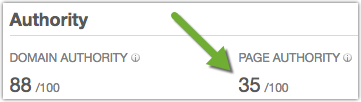
This is a pretty good page authority. But, what happens if your link doesn’t get placed on this page, and instead is buried in a deep archive page:
http://lawyers.findlaw.com/lawyer/firm/personal-injury-plaintiff/houston/texas?random=656&stq=80
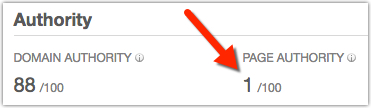
All of a sudden, you’re getting a lot less value for your money.
The same thing happens with the big legal directories. An Avvo or Justia profile page can be a strong page on its own. But a listing buried in a Martindale city archive or a FindLaw state subdirectory often sits on a page that almost nobody else links to. Before paying any directory, look at the specific page your listing will actually live on. The directory’s homepage score doesn’t tell you anything useful.
-
-
Followed link or nothing
-
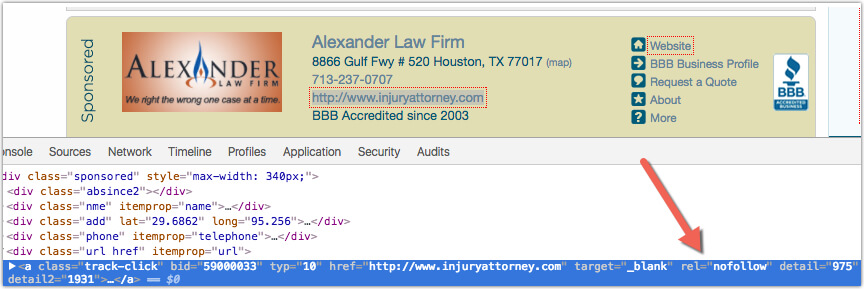
If you’re going to spend good money on a link, it’s essential that the link be of the followed variety. Many sites that sell links do not make it clear that the link you recieve will be a “nofollow” link.
While there is evidence that nofollow links could still have positive ranking benefits in certain cases, they’re certainly not optimal, especially when your paying for them.
The BBB is a great example of this. You can pay $600+ per year for a listing on BBB.org, but you’ll get the same nofollow link as their free, non-accredited profiles.
Anchor text and vendor red flags
The fourth thing to check is the anchor text, which is the clickable words the link will actually use. Say a vendor wants the link to read as your exact target keyword, something like “houston personal injury lawyer.” That’s the most obvious sign of a paid link that Google looks for. Safer options are your firm name, your website address, or a generic phrase like “learn more.” In our experience, exact-keyword anchors should stay under 5 to 10 percent of all your paid links.
The vendor itself is the other thing to watch. Be careful with any service that sells bundles of links on its own network of blogs. Be just as careful with any vendor that won’t tell you which sites your link will actually live on. And any service promising dozens of links a month for a few hundred bucks is doing exactly what Google’s spam systems are built to catch.
Takeaways
- Technically, paid links are against Google’s quality guidelines, but…
- Many of the top rankings legal websites in the most competitive markets rely on paid links
- If you do decide to buy links, you should consult with experienced law firm SEO professionals before buying to ensure that you maximize benefit and minimize risk
Last updated: